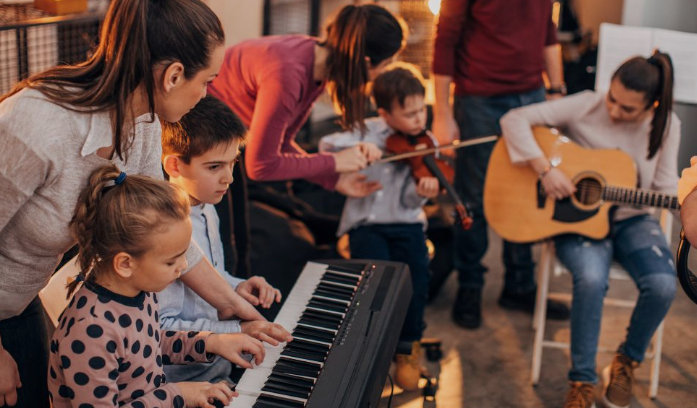
Education music is an important part of learning because it combines creativity, discipline, communication, and emotional expression. Music education can introduce students to singing, instruments, rhythm, composition, music theory, performance, and listening skills. It can also support broader educational development by encouraging concentration, teamwork, confidence, and creative thinking. From early childhood classrooms to universities and community programs, music can be taught in many different ways according to the age, interests, and abilities of learners. Understanding the role of music in education can help parents, teachers, and students recognize how structured musical experiences can contribute to a well-rounded learning environment.
What Is Music Education?
Music education refers to the organized teaching and learning of music. It can include practical activities such as singing and playing instruments as well as theoretical subjects such as notation, harmony, rhythm, composition, and music history.
The purpose of music education is not necessarily to turn every student into a professional musician. Instead, it can provide students with opportunities to explore sound, creativity, cultural traditions, and self-expression.
Music education can take place in schools, colleges, private studios, community centers, online learning environments, and specialized music institutions. The teaching methods can vary considerably depending on the setting.
The Role of Music in Early Education
Introducing children to music at an early age can make learning more interactive and engaging. Simple songs, rhythmic activities, movement, and musical games can help young learners participate actively in classroom activities.
Teachers can use songs to reinforce concepts such as numbers, letters, language patterns, memory exercises, and classroom routines. Musical activities can also encourage children to listen carefully and respond to changes in rhythm, pitch, tempo, and volume.
Early music experiences can be informal and playful. Children can experiment with their voices, percussion instruments, movement, and everyday sounds while gradually developing an understanding of musical concepts.
Music Education in Schools
School music programs can provide students with structured opportunities to develop musical knowledge and performance skills. Depending on the school, students may participate in general music classes, choirs, bands, orchestras, instrumental lessons, or music technology programs.
Students can learn to read musical notation, recognize rhythms, perform pieces, listen critically, and understand different musical styles.
School music programs can also create opportunities for collaboration. Ensembles require students to listen to one another, follow a conductor or shared tempo, practice consistently, and contribute to a collective performance.
Learning Musical Instruments
Instrumental education is one of the most recognizable forms of music learning. Students can choose instruments based on their interests, available instruction, physical considerations, and musical goals.
Common instruments include piano, guitar, violin, flute, drums, trumpet, clarinet, and various other instruments.
Learning an instrument generally requires regular practice. Students gradually develop skills such as coordination, timing, technique, reading music, listening, and musical interpretation.
The learning process can also teach patience. Musical progress is often gradual, and students may need to practice the same skill repeatedly before achieving consistent results.
Singing and Vocal Education
Singing is another accessible way to introduce students to music. Unlike instrumental learning, singing requires no separate instrument, making it suitable for many classroom environments.
Vocal education can cover breathing, pitch, rhythm, pronunciation, tone production, musical expression, and performance techniques.
Group singing can also encourage cooperation. Students learn to maintain their individual parts while listening to the overall sound of the group.
For some learners, singing can become an important form of personal expression and confidence building.
Music Theory and Musical Understanding
Practical performance is only one part of music education. Music theory provides students with concepts that help them understand how music is organized.
Students may study notes, scales, intervals, chords, rhythm, melody, harmony, form, dynamics, and musical notation. These concepts can support both performance and composition.
Understanding theory can also make it easier for students to communicate musical ideas. For example, musicians can use common terminology to discuss rhythm, structure, key, harmony, and interpretation.
Technology and Modern Music Education
Technology has changed how students can learn, create, record, and share music. Digital audio workstations, music notation software, recording applications, virtual instruments, and online lessons have expanded the tools available to learners.
Students can experiment with composition and sound production without needing access to a large traditional studio. Digital tools can also help learners record performances and review their progress.
Music technology can be especially useful for students interested in contemporary production, electronic music, film scoring, game audio, podcast production, or recording.
Benefits of Music Education
Music education can support several areas of student development. Regular musical practice can encourage discipline because learners need to establish routines and work toward specific goals.
Music can also promote creativity. Composition, improvisation, interpretation, and performance allow students to make artistic choices.
Group music activities can develop communication and teamwork because participants must coordinate with others. Performing in front of an audience may also provide opportunities to build confidence.
Music education can additionally expose students to cultural traditions from different regions and historical periods, helping them understand music as part of broader human culture.
Music and Academic Learning
Music education can complement other areas of academic learning. Musical activities involve patterns, sequencing, listening, memory, and symbolic representation, which can connect naturally with skills used in other subjects.
For example, rhythm can provide opportunities to explore patterns and counting, while lyrics can support language development. Music history can also connect with social studies, cultural studies, and historical events.
However, music education has value beyond whether it produces improvements in another academic subject. Music is itself an important area of knowledge involving artistic, cultural, technical, and creative learning.
Inclusive Music Education
Effective music education should provide opportunities for learners with different abilities, backgrounds, interests, and levels of previous experience.
Teachers can adapt activities by changing instruments, simplifying musical parts, using visual aids, incorporating technology, or allowing different forms of participation.
An inclusive classroom can allow students to contribute in different ways. One student may perform, another may compose, while another may participate through rhythm, technology, movement, or creative discussion.
This flexibility can make music education more accessible and meaningful to a broader range of learners.
Careers Related to Music Education
Students who develop strong musical and educational skills can explore several career paths. Teaching is one obvious option, including roles in schools, private studios, community programs, and specialized institutions.
Other possibilities include music performance, composition, arranging, conducting, music production, sound engineering, arts administration, music technology, and media-related audio work.
Some careers combine music with another discipline. For example, professionals may work in film, television, video games, advertising, digital media, or educational technology.
How Parents Can Support Music Learning
Parents can support music education by creating a positive environment for practice rather than treating practice only as a requirement.
Providing access to an appropriate instrument, maintaining a regular practice schedule, attending performances, and showing interest in a child’s progress can encourage continued engagement.
Parents should also allow children to explore their own musical preferences. Exposure to different genres and instruments can help students discover what interests them most.
Progress should be measured realistically because every learner develops at a different pace.
Key Points to Remember
Music education can include singing, instrumental instruction, theory, composition, listening, and performance.
Early musical experiences can introduce children to rhythm, sound, movement, and creative expression.
School programs can provide opportunities for individual learning and group performance.
Learning an instrument requires consistent practice and patience.
Music theory helps students understand how musical ideas are structured and communicated.
Technology has expanded opportunities for music creation, recording, and online learning.
Music education can support creativity, teamwork, discipline, communication, and confidence.
Inclusive teaching methods can help students with different abilities and learning preferences participate.
Music can be studied as both an academic subject and a creative art form.
Tips for Making Music Education More Effective
Teachers should create activities that match students’ ages, experience levels, and interests. Beginners generally benefit from clear instructions, achievable goals, and plenty of opportunities to practice.
Variety can also make lessons more engaging. A class might combine listening, singing, movement, rhythm exercises, instrument practice, and creative activities instead of relying on one teaching method.
Technology can be introduced when it genuinely supports learning. Digital recording, notation, and composition tools can help students experiment with musical ideas.
Teachers should provide constructive feedback that explains what is working and what can be improved. Specific feedback gives students a clearer path toward progress.
Finally, music education should leave room for creativity. Students should have opportunities to make choices, experiment with sounds, create compositions, and express their own musical ideas.
Final Thoughts
Education music can provide students with a combination of creative, practical, cultural, and academic experiences. Through singing, instruments, music theory, composition, technology, and performance, learners can develop musical skills while exploring communication and self-expression. Music education can also create opportunities for teamwork, discipline, confidence, and cultural understanding. Its value extends across different ages and learning environments, from early childhood classrooms to higher education and professional training. A thoughtful music program should provide structured instruction while allowing students enough freedom to explore their interests. When learning is accessible, engaging, and appropriately challenging, music can become a meaningful part of a student’s overall educational journey.
Frequently Asked Questions
What is education music?
Education music refers to the teaching and learning of music through activities such as singing, instrumental performance, music theory, listening, composition, and musical analysis.
Why is music education important?
Music education can provide opportunities for creativity, discipline, communication, teamwork, cultural understanding, and artistic expression while helping students develop practical musical skills.
What can students learn through music classes?
Students can learn rhythm, melody, musical notation, performance techniques, instrument skills, vocal techniques, music theory, composition, listening, and music history.
Can technology be used in music education?
Yes. Digital recording software, music production tools, notation programs, virtual instruments, and online learning platforms can support different aspects of music education.
How can parents encourage music learning at home?
Parents can encourage regular practice, provide access to suitable musical resources, attend performances, explore different types of music with their children, and maintain a supportive attitude toward learning and improvement.