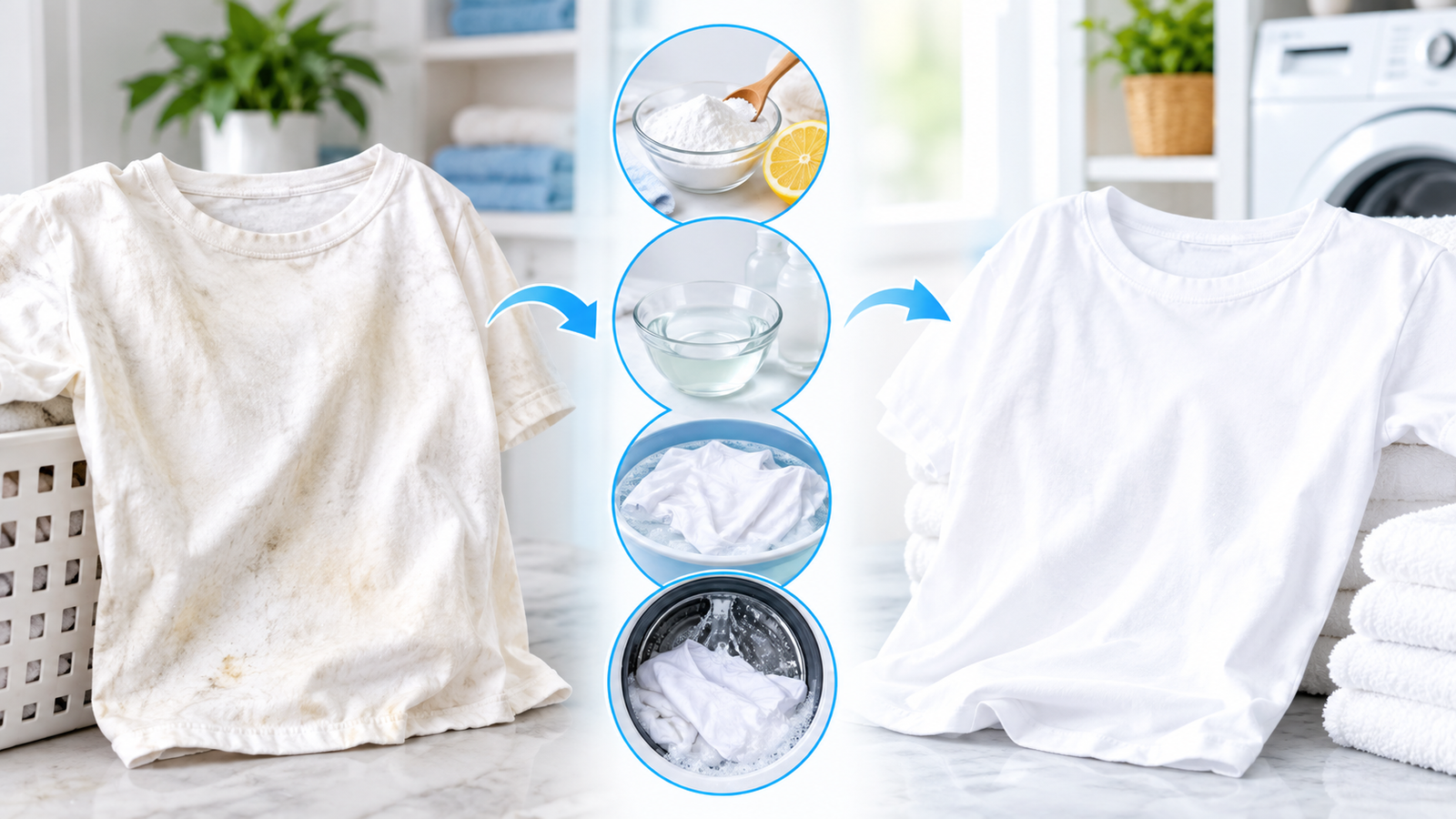
Knowing how to whiten white clothes can help keep shirts, towels, bedsheets, socks, and other white fabrics looking fresh and clean. Over time, white clothing can become gray, yellow, dull, or stained because of sweat, body oils, food spills, detergent buildup, hard water, and everyday wear.
Fortunately, you do not always need complicated cleaning methods to restore the appearance of white clothes. The right washing temperature, detergent, stain treatment, and whitening method can make a noticeable difference.
The most important step is to check the garment’s care label before using any whitening product. Different fabrics require different treatments, and some materials can be damaged by strong chemicals or excessive heat.
Why Do White Clothes Turn Yellow or Gray?
White clothes can lose their brightness for several reasons. Sweat and body oils can gradually build up in fabric fibers, particularly around collars, underarms, and cuffs.
Using too much detergent can also leave residue that makes fabric look dull. Hard water may contribute to mineral buildup, while washing white clothes with darker garments can cause unwanted color transfer.
Common causes of dull or yellow white clothes include:
| Cause | Effect on White Clothes |
|---|---|
| Sweat | Yellow or gray areas |
| Body oils | Dull or yellow appearance |
| Food stains | Visible discoloration |
| Detergent buildup | Gray or cloudy appearance |
| Hard water | Mineral residue |
| Washing with colors | Color transfer |
| Excessive heat | Can set some stains |
| Improper storage | Yellowing over time |
Understanding the cause can help you choose the most suitable whitening method.
How to Whiten White Clothes in the Washing Machine
One of the easiest ways to whiten white clothes is to use your washing machine correctly.
Start by separating whites from colored clothing. Check the care label and select the warmest water temperature that is safe for the fabric.
Use a good-quality laundry detergent according to the recommended amount. Adding too much detergent does not necessarily make clothes cleaner and can contribute to residue buildup.
For particularly dull whites, a laundry whitener or oxygen-based whitening product designed for clothing can be added according to its instructions.
Avoid overcrowding the washing machine. Clothes need enough room for water and detergent to circulate properly.
How to Whiten White Clothes With Oxygen Bleach
Oxygen bleach is a popular option for whitening and stain removal. Unlike chlorine bleach, oxygen-based products are often considered a gentler alternative for many washable fabrics.
Oxygen bleach can help with:
- Yellowing
- Grayness
- Food stains
- Sweat stains
- General dullness
- Organic stains
Always check the product instructions and garment care label before use. Some fabrics and finishes may not be suitable for particular whitening products.
For stubborn discoloration, soaking the clothing in an appropriate oxygen-based solution before washing can sometimes improve results.
How to Whiten White Clothes With Chlorine Bleach
Chlorine bleach can whiten certain washable white fabrics, but it should be used carefully.
First, check whether the garment’s care label permits chlorine bleach. Some fabrics can become damaged, weakened, yellowed, or otherwise affected by chlorine bleach.
Never mix chlorine bleach with ammonia, acids, vinegar, or other cleaning products. Dangerous chemical reactions can occur.
If chlorine bleach is appropriate for the garment, follow the product’s dilution and usage instructions carefully rather than adding an excessive amount.
How to Whiten White Clothes With Baking Soda
Baking soda is commonly used as a laundry booster and can help freshen fabrics. It can be particularly useful when white clothes have accumulated everyday odors and mild dullness.
Add an appropriate amount of baking soda to the washing machine according to your laundry routine and product guidance.
Baking soda is not a replacement for a dedicated stain remover when dealing with severe discoloration. For difficult stains, pretreatment may be more effective.
How to Whiten White Clothes With Vinegar
White vinegar is sometimes used in laundry to help reduce odors and detergent residue. However, it should not be treated as a universal whitening solution.
If you use vinegar in laundry, use it separately from chlorine bleach. Never mix vinegar with chlorine bleach, because the combination can produce dangerous chlorine gas.
Vinegar may be more useful as part of a general laundry-care routine than as a powerful treatment for heavily yellowed clothing.
How to Whiten White Clothes With Lemon Juice
Lemon juice is a traditional home method sometimes used to brighten white fabrics. It contains citric acid and may help with certain mild stains or discoloration.
For delicate or valuable clothing, test any homemade treatment on an inconspicuous area first.
Sunlight can also help brighten some white fabrics after washing, although prolonged exposure can affect certain materials and finishes.
How to Whiten White Clothes With Hydrogen Peroxide
Hydrogen peroxide can be used as a whitening and stain-treatment ingredient when used appropriately. Some laundry whitening products are based on oxygen-releasing chemistry.
For household laundry, it is generally safer to use a commercially formulated laundry product and follow its instructions rather than improvising concentrations.
Always check fabric compatibility and test an inconspicuous area when necessary.
How to Remove Yellow Armpit Stains From White Clothes
Yellow underarm stains are usually caused by a combination of sweat, body oils, deodorant or antiperspirant residue, and repeated washing.
Treat the affected area before putting the garment into the dryer. Heat can make certain stains more difficult to remove.
A suitable laundry stain remover or oxygen-based treatment can be applied according to the product directions.
For persistent stains, allow the treatment enough time to work before washing. Avoid aggressively scrubbing delicate fabrics.
How to Whiten White Clothes Without Bleach
If you prefer not to use chlorine bleach, there are several alternatives.
Oxygen-based laundry whiteners are one common option. Other approaches include proper detergent use, stain pretreatment, soaking, and washing whites separately.
| Method | Best For |
|---|---|
| Oxygen bleach | General whitening |
| Baking soda | Odors and mild dullness |
| Proper detergent | Everyday cleaning |
| Stain remover | Specific stains |
| Sun drying | Freshness and mild brightening |
| Soaking | Stubborn discoloration |
The best method depends on the fabric and the type of discoloration.
How to Whiten White Clothes Naturally
People searching for natural ways to whiten white clothes often consider baking soda, lemon juice, sunlight, or soaking methods.
Natural methods may be useful for mild stains and everyday freshness, but they may not be powerful enough for severe yellowing or deeply embedded stains.
If using any acidic or homemade solution, check fabric compatibility first. Natural does not automatically mean harmless to every textile.
How to Whiten White Clothes by Soaking
Soaking can be particularly useful when white clothes are heavily soiled or have developed a dull appearance.
Fill a suitable container with water at a temperature appropriate for the fabric. Add the recommended amount of laundry detergent or a compatible oxygen-based whitening product.
Place the garments in the solution and allow them to soak for the period recommended by the product or care instructions.
After soaking, wash the clothes normally.
Do not combine multiple cleaning chemicals in the same soaking solution unless the product instructions specifically state that they are compatible.
How to Whiten White Towels
White towels can become gray or yellow because they absorb body oils, skincare products, sweat, and detergent residue.
Wash white towels separately from colored laundry when possible. Avoid using excessive fabric softener, as buildup can affect absorbency and appearance.
For dull towels, an oxygen-based laundry whitener may be useful if the towel’s care label permits it.
Make sure towels are completely dry before storing them to reduce the risk of unpleasant odors.
How to Whiten White Socks
White socks often become gray because they collect dirt from floors and shoes.
Before washing, separate white socks from colored laundry. Pretreat heavily stained areas with a suitable laundry stain remover.
For washable socks that allow it, an oxygen-based whitening treatment can help restore brightness.
Avoid using excessively hot water unless the care label permits it, because some elastic materials can be damaged by high temperatures.
How to Whiten White Shirts
White shirts are especially prone to yellowing around the collar and underarms.
For best results, treat visible stains before washing. Apply an appropriate stain remover and allow it to work according to the product directions.
Wash white shirts separately from colored garments and choose a suitable water temperature based on the care label.
If a shirt remains yellow after washing, avoid immediately placing it in a hot dryer. Repeat an appropriate stain-treatment process first.
How to Whiten White Clothes With Hard Water
Hard water contains minerals that can interact with detergents and contribute to residue buildup.
If you live in an area with hard water, clothes may gradually appear less bright even when they are washed regularly.
A laundry water softener or detergent booster designed for hard-water conditions may help. Follow the manufacturer’s directions and avoid simply adding more detergent.
If hard water is a persistent household problem, installing an appropriate water-softening system may provide a longer-term solution.
Best Water Temperature for White Clothes
The best water temperature depends on the fabric and care label.
Hot water can be useful for some durable fabrics and heavily soiled laundry, but it is not appropriate for every garment.
| Water Temperature | Common Use |
|---|---|
| Cold | Delicate fabrics and everyday washing |
| Warm | Many washable everyday garments |
| Hot | Some durable whites and heavily soiled items |
Always prioritize the manufacturer’s care instructions.
How to Prevent White Clothes From Turning Gray
Preventing discoloration is often easier than restoring heavily yellowed or gray clothing.
Wash white garments separately from dark and brightly colored clothing. Do not overload the washing machine, and use the recommended amount of detergent.
Treat stains as soon as possible instead of allowing them to remain in fabric for multiple washes.
Regularly cleaning your washing machine can also help prevent detergent residue, dirt, and buildup from transferring back onto clothes.
How to Keep White Clothes White Longer
A few simple habits can help maintain bright white clothing.
Wash whites separately, treat stains quickly, use the correct amount of detergent, and avoid unnecessary chemical treatments.
Do not assume that more bleach or more detergent will produce whiter clothes. Excessive cleaning chemicals can damage fibers and sometimes make discoloration worse.
Dry clothes according to their care labels and store them in a clean, dry environment.
Common Mistakes When Whitening White Clothes
Several laundry mistakes can make white clothes look worse.
Using too much detergent: Excess detergent can remain in fabric and contribute to dullness.
Mixing cleaning chemicals: Never combine incompatible products such as chlorine bleach and vinegar.
Skipping the care label: A whitening method suitable for cotton may not be appropriate for delicate synthetic or specialty fabrics.
Using excessive heat: High temperatures can shrink fabrics, damage fibers, or set certain stains.
Overloading the washer: Crowded clothes cannot move freely, reducing cleaning effectiveness.
Putting stained clothes in the dryer: Heat can make some stains harder to remove.
Best Whitening Method for Different White Clothes
The ideal method depends on the garment.
| White Item | Suitable Approach |
|---|---|
| Cotton T-shirt | Detergent + suitable whitening product |
| White towels | Oxygen-based whitener if compatible |
| White socks | Pretreatment + normal wash |
| Dress shirt | Stain pretreatment + appropriate wash |
| Bed sheets | Suitable detergent + oxygen whitening |
| Delicate white clothing | Gentle care according to label |
| Synthetic clothing | Fabric-safe stain treatment |
Always check the care label before using bleach or other strong whitening products.
Final Thoughts on How to Whiten White Clothes
Learning how to whiten white clothes is mainly about using the right cleaning method for the fabric and the type of discoloration. Separating white laundry, treating stains early, using the correct detergent amount, and choosing a suitable whitening product can help maintain brighter clothes.
Oxygen-based whiteners are a useful option for many washable fabrics, while chlorine bleach should only be used when the garment and product instructions permit it. Homemade methods such as baking soda or lemon may help with mild cleaning needs, but they are not guaranteed solutions for severe stains.
Most importantly, avoid mixing cleaning chemicals and always follow the garment’s care label. With consistent laundry habits, white clothes can stay brighter, cleaner, and fresher for longer.
How can I whiten white clothes that have turned gray?
Wash the clothes separately from colors and consider using a suitable oxygen-based laundry whitener if the fabric allows it. Proper detergent use and avoiding overloading can also help.
What is the best way to whiten white clothes without bleach?
An oxygen-based laundry whitener is a common bleach-free option. Proper washing, stain pretreatment, soaking, and suitable detergent can also help improve the appearance of white clothing.
Can baking soda whiten white clothes?
Baking soda can help freshen laundry and may assist with mild dullness, but it is not as powerful as dedicated laundry whitening products for severe discoloration.
How do I remove yellow armpit stains from white clothes?
Pretreat the affected area with a suitable stain remover or compatible oxygen-based product before washing. Avoid putting the garment in the dryer until the stain has been removed.
Can I mix vinegar and bleach to whiten clothes?
No. Never mix vinegar with chlorine bleach. The combination can release dangerous chlorine gas. Use cleaning products separately and follow their instructions.



One thought on “How to Whiten White Clothes: Easy Methods to Make Whites Look Bright Again”